How to Improve at Hoop Dance: An Intermediate Hooper’s Step-by-Step Guide
- Michele McCoy
- Hoop Guides & Tips
If you know the foundational hoop dance moves but still feel as though your flow is made of separate tricks, you are not alone. The move from beginner to intermediate hooping is less about collecting as many tricks as possible and more about learning how to connect, vary, and express the movements you already know.
I created this guide to help you understand what to practice next. You will learn how to strengthen your foundations, build smoother transitions, create combinations, explore musicality, and develop a style that feels like your own.
If you are still building your first foundations, begin with my step-by-step beginner hoop dance guide. If you already feel comfortable with basic on-body and off-body movements, keep reading.
What makes someone an intermediate hoop dancer?
There is no official test that turns a beginner into an intermediate hooper. Progress is personal, and every hooper develops different strengths. You may feel completely comfortable with weaves and isolations while still developing confidence with tosses and rolls, or you may love off-body movement while continuing to strengthen shoulder, chest, or leg hooping.
You may be ready to move beyond beginner practice if you can:
Keep the hoop moving comfortably in your natural current
Perform several foundational on-body and off-body movements
Recognize basic planes, currents, and hand positions
Practice a movement on both sides, even if one side feels less natural
Connect at least two or three moves without stopping
Troubleshoot a movement by slowing it down and repeating the pathway
You do not need to master every beginner move before exploring intermediate hoop dance. You only need enough foundation to practice with awareness and build from what you already understand.
Step 1: Strengthen the foundations you already have
When you want to improve quickly, it can be tempting to chase the newest or most difficult trick. But your strongest progress often comes from returning to foundational movements with greater attention.
Choose a few familiar moves and explore them in both directions, with both hands, and on different planes. Notice your posture, grip, timing, and the path the hoop travels. A movement you already know can feel completely new when you reverse it, change its level, or enter it from another position.
Try spending the first ten minutes of each practice revisiting foundations. This gives your body time to warm up while building the control that makes more complex movement possible.
Step 2: Practice transitions instead of isolated tricks
A trick is one moment. Flow is the pathway into it, through it, and out of it.
Choose two moves you already know and ask three questions:
Where does the first move finish?
Where does the second move need to begin?
What is the smallest change that connects those two positions?
Sometimes the answer is a hand change, a turn, a pass, a stall, or one extra rotation. Practice only that connecting moment until it feels familiar. Then repeat the transition in the opposite direction or try entering it from a different angle.
This type of focused practice builds more usable flow than learning five unrelated tricks in one session. It also helps you understand movement pathways instead of memorizing only the finished shape.
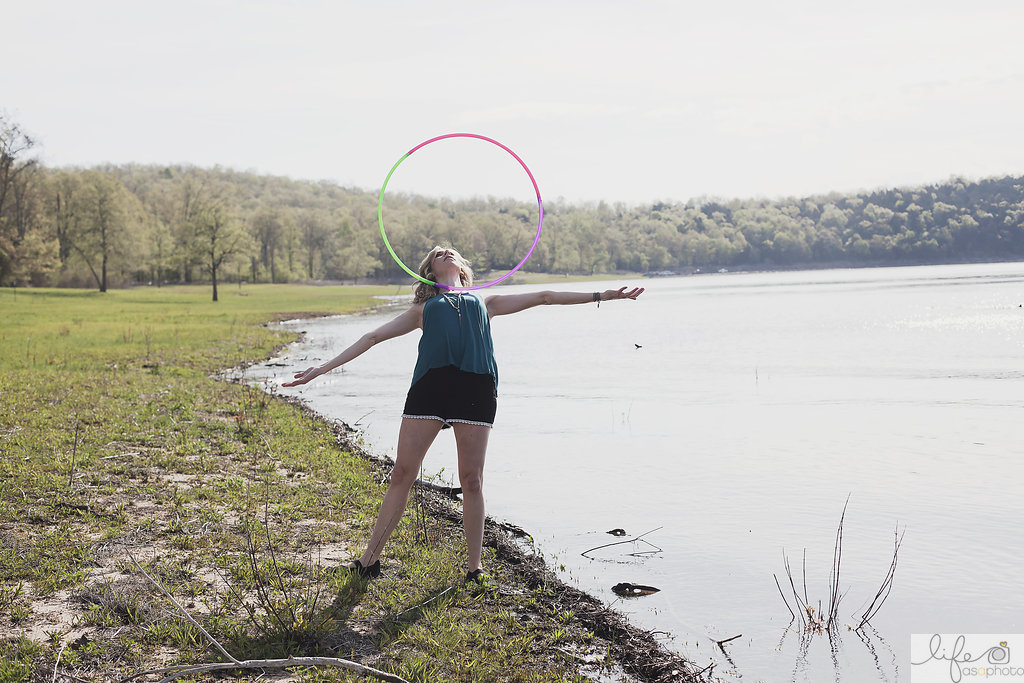
Step 3: Build short hoop dance combinations
Once a transition begins to feel comfortable, add one more movement. A three- or four-move combination is long enough to practice memory and continuity without becoming overwhelming.
For example, you might choose:
One move that feels familiar
One transition you are developing
One move that challenges you
One simple finish that lets you reset
Repeat the combination slowly before adding speed. Then change one element at a time: reverse the direction, switch hands, turn your body, lower the hoop toward the floor, or travel through the space.
If you would like a more challenging example to explore, try my chest roll, breaks, and pop-up combination. You can also browse my hula hoop trick names and tutorial library when you want help identifying a movement or choosing something new to practice.
Step 4: Train both sides and directions
Most of us have a side or direction that feels more natural. There is nothing wrong with having a favorite, but practicing only that side can limit the transitions available to you.
Begin with a movement you know well. Give yourself several comfortable repetitions in your preferred direction, then try a few slow repetitions on the other side. Expect it to feel unfamiliar. Your goal is not immediate symmetry; your goal is to help your body understand another pathway.
Balanced practice can make direction changes feel more natural and give you more choices when you are improvising. It can also reveal small details in a move that you may not notice on your dominant side.
Step 5: Add musicality, levels, and direction changes
Intermediate hoop dance begins to feel expressive when the hoop responds to more than a memorized sequence.
Choose a song you enjoy and listen once without hooping. Notice the beat, pauses, changes in energy, and any sounds that catch your attention. Then hoop to the song with only a few familiar movements.
Experiment with:
Moving slowly through quiet parts and more quickly when the music builds
Using a stall, isolation, or pose during a pause
Changing direction when the rhythm changes
Moving between high, middle, and low levels
Turning, traveling, or changing your focus within the space
Repeating one movement as a theme throughout the song
You do not have to hit every beat. Let the music offer possibilities rather than rules. The more you listen, the more your movement can become a response instead of a performance you are trying to force.
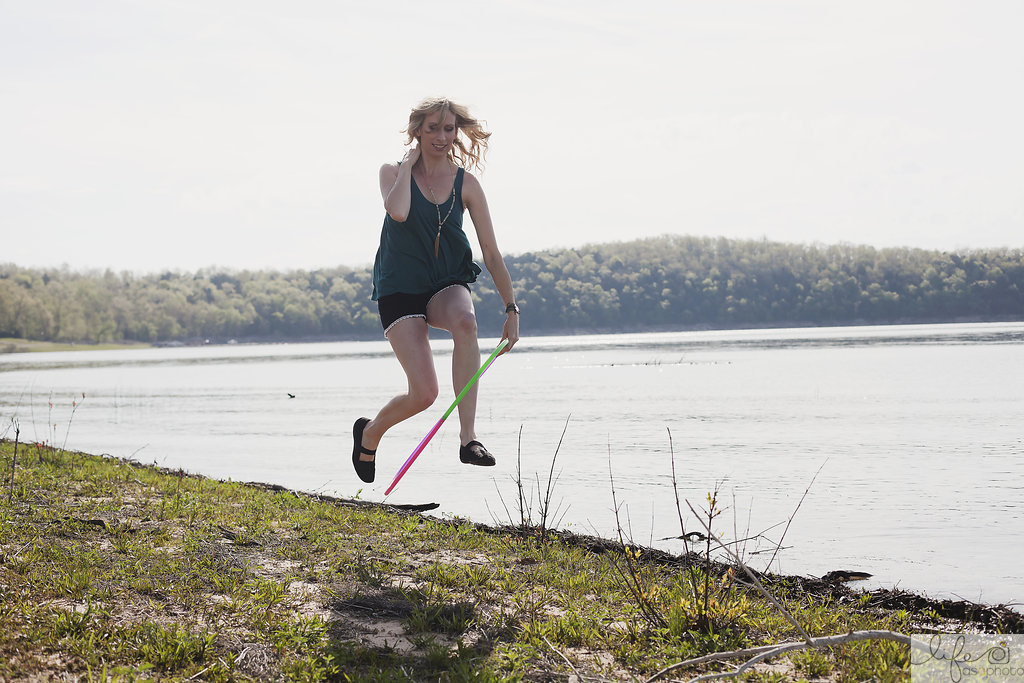
Step 6: Develop a hoop dance style that feels like yours
Your style is not something you need to invent all at once. It grows from the choices you make repeatedly: the movements you enjoy, the music that draws you in, the shapes your body naturally creates, and the energy you bring to your practice.
Try recording a short flow session and watching it with curiosity rather than criticism. Notice the moments that feel most natural or interesting. You might discover that you enjoy grounded movement, sharp breaks, graceful rolls, fast off-body patterns, expressive on-body hooping, or playful combinations.
Use those observations as clues. Keep exploring other styles, but allow yourself to spend more time with the movement that makes you want to pick up your hoop again.
Step 7: Work through a hooping rut with mindful practice
Every hooper reaches moments when progress feels slow. You may repeat the same moves, compare yourself with other dancers, or feel pressure to make every practice productive.
When that happens, make the practice smaller. Choose one move, one song, or ten quiet minutes with your hoop. Pay attention to your breath, the sensation of movement, and what your body needs that day. Some sessions are for learning. Others are for reconnecting.
A rut does not mean you have stopped growing. Sometimes it is an invitation to rest, revisit a foundation, change your environment, or remember why you started hooping in the first place.
An optional four-week intermediate hoop dance practice plan
If a little structure helps you stay focused, try the four-week outline below. Adapt the number and length of your sessions to your life, and leave room for play, rest, and simple time inside the circle.
Week 1: Foundations and both sides
Choose four foundational movements. Practice each in both directions and pay attention to posture, timing, and control.
Week 2: Transitions
Choose three pairs of movements. Spend most of your practice exploring smooth ways to connect each pair.
Week 3: Combinations and musicality
Build one short combination. Practice it at different speeds, on different levels, and with two contrasting songs.
Week 4: Personal flow
Use the movements and transitions from the previous weeks in an open flow session. Record part of one practice and notice what you want to continue developing.
At the end of four weeks, repeat the plan with new movements or stay with the same material and explore it more deeply.
Choose the next direction for your hoop practice
Once your foundations feel dependable, you can choose a path that matches what you want to explore next.
Build creative flow and intermediate technique
Refresh Your Flow is my complete intermediate and advanced course for hoopers who want new tricks, connected combinations, mindful practice, and help developing a personal style. It includes detailed instruction across on-body moves, weaves, rolls, escalators, wedgies, tosses, breaks, and more.
Strengthen on-body hooping
If you want to deepen waist, chest, shoulder, leg, and core-based movement, explore Intensive Core On-Body Hooping with Katie Sunshine.
Explore two-hoop movement
If you are ready to coordinate two hoops and expand your off-body movement vocabulary, explore Off-Body Doubles with Caterina Suttin.
Build performance confidence
If you want to develop stage presence, stronger routines, and more confident performance skills, explore Hoop Dance Techniques for the Stage with Hula Hooping Hannah.
Your next step does not have to be complicated
Improving at hoop dance is not a race toward the hardest trick. It is the gradual practice of understanding your movements, connecting them with intention, listening to your body, and making choices that feel like your own.
Start with one foundation, one transition, and one song. Let your practice grow from there.
When you are ready for a complete path through intermediate and advanced movement, I would love to guide you inside Refresh Your Flow.
Happy hooping!
Ready to Keep Learning?
Build your skills with Michele’s structured, self-paced hoop-dance courses—from complete beginner foundations to intermediate flow, on-body hooping, doubles, and performance.